Design Is a Puzzle. And It’s a Feeling.

Why your room still feels “off” — and how I create clarity without starting over.

A lot of people think design is a shopping problem. I get why. Shopping is the part you can see. You can point to a sofa or a rug and say, “That’s the answer.” But most of the time, the real value isn’t in buying something new. It’s in discernment: knowing what stays, what goes, what gets reworked, and what needs to be added so the room actually functions and feels right. The way you get there usually isn’t by starting over. It’s by layering. Most rooms don’t need more stuff — they need clearer priorities.


What I Mean by “The Puzzle”

When I walk into a room, I’m rarely thinking, What should we buy? I’m thinking, What are we working with and what is this room trying to be? Because you already have a lot of the pieces: furniture you’ve lived with (and have feelings about), artwork and objects that matter, things you’ve inherited or kept for a reason, and a layout that may or may not be helping you.

Then there’s the real-life layer that matters just as much, if not more –– how you actually use the space, where people naturally gather, what feels awkward, what feels unfinished, and what keeps you from using the room the way you want to.

That’s the puzzle. And it’s incredibly common to feel stuck here — because it’s hard to see the full picture when you’re living inside it.

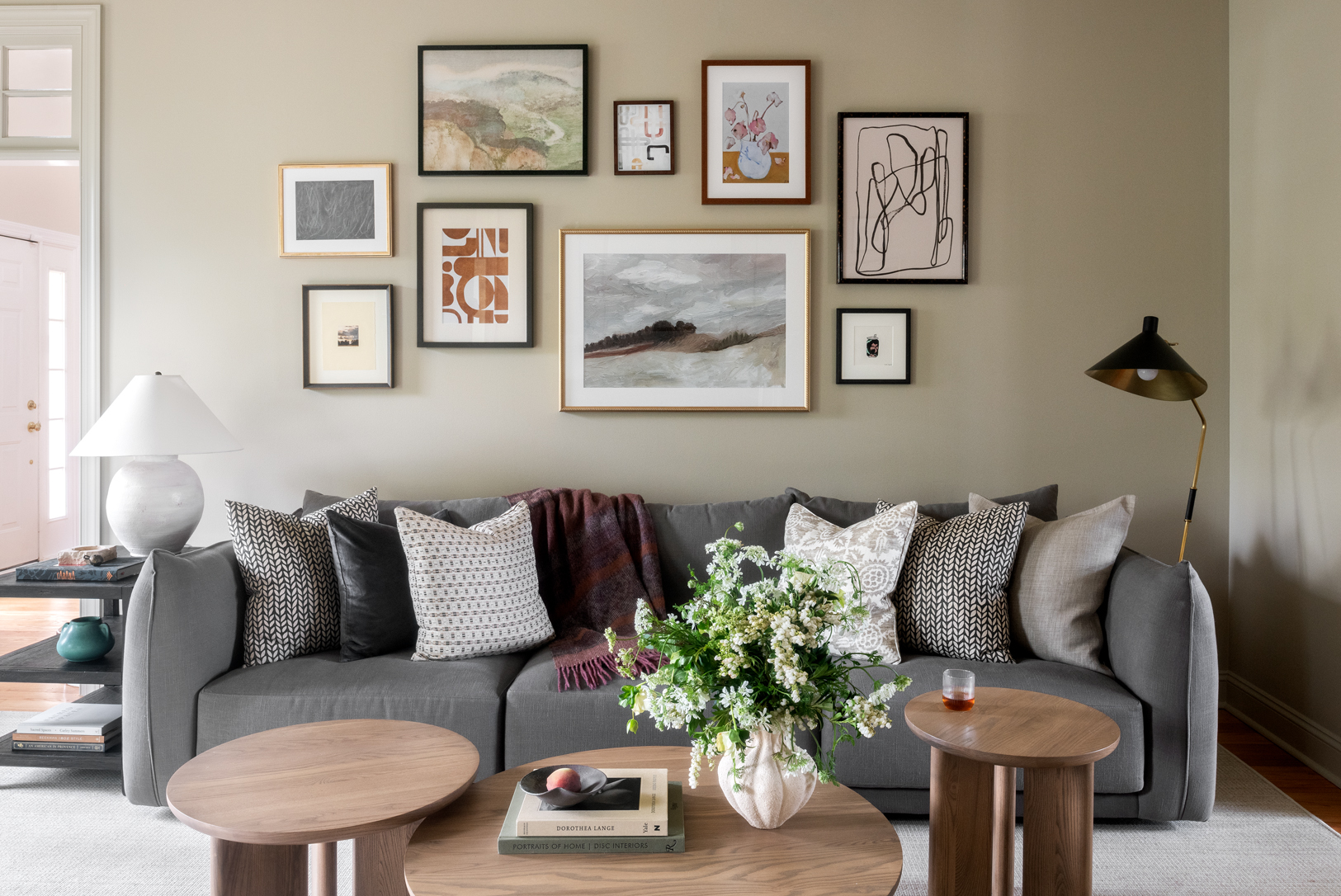
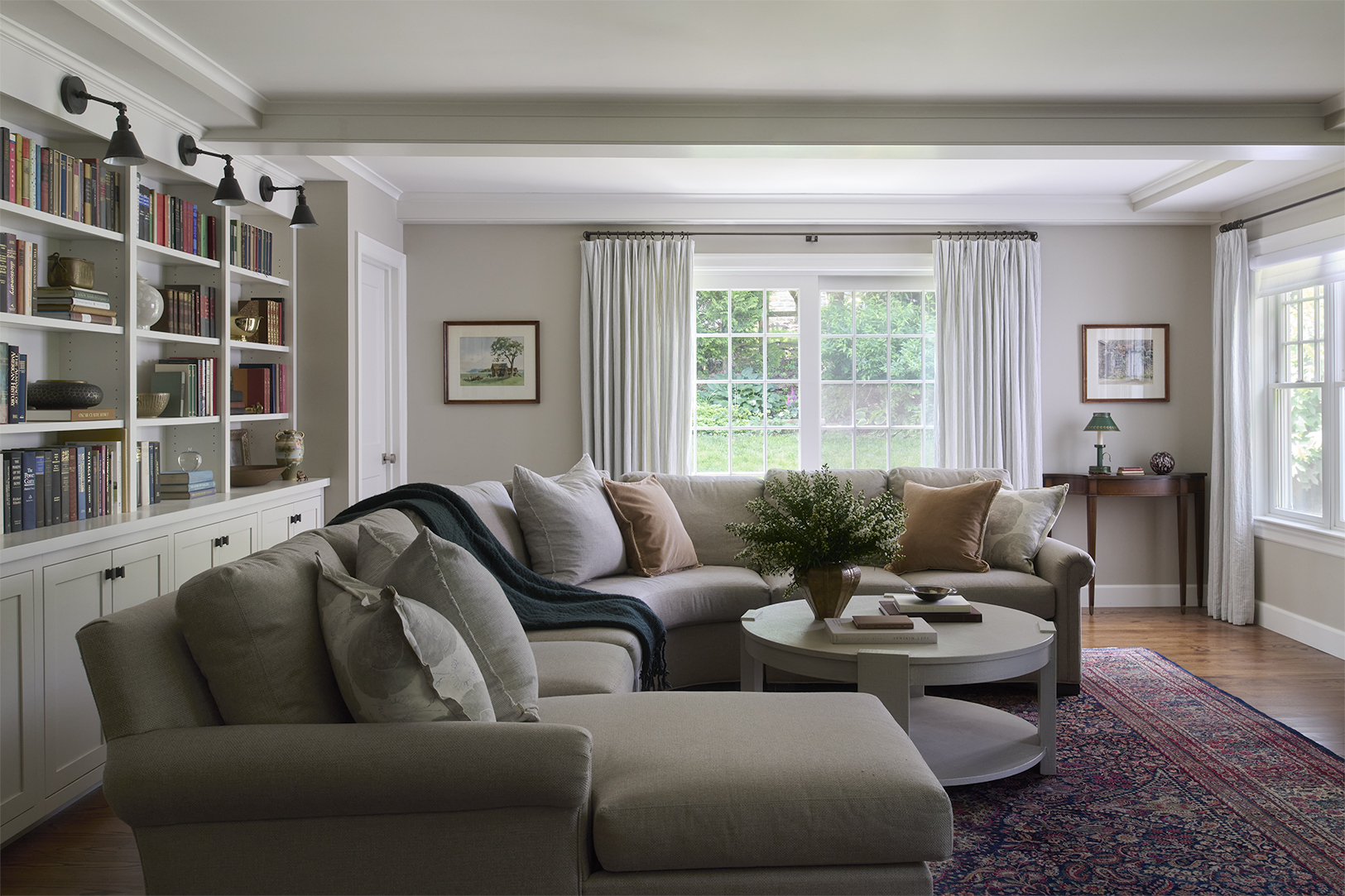
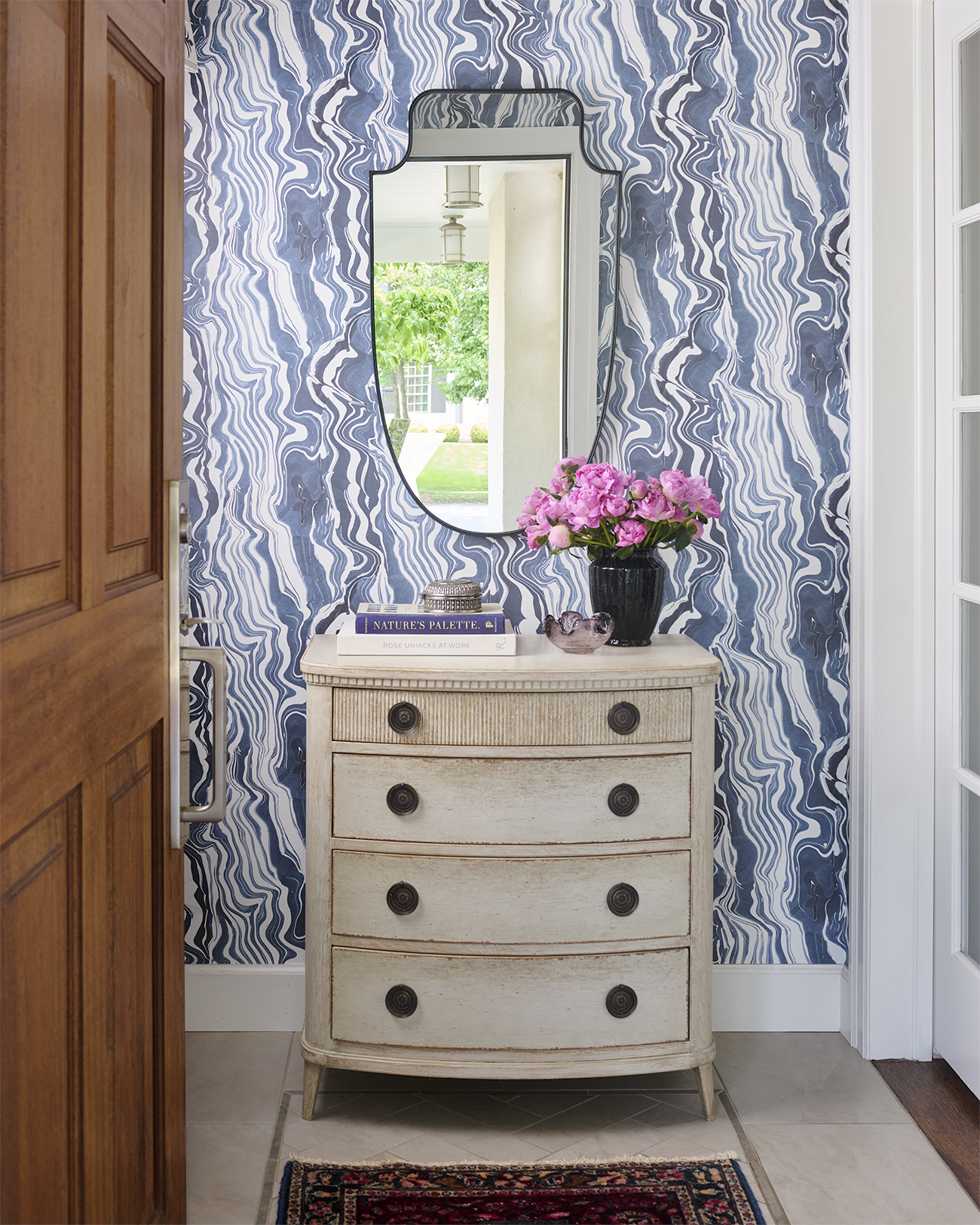
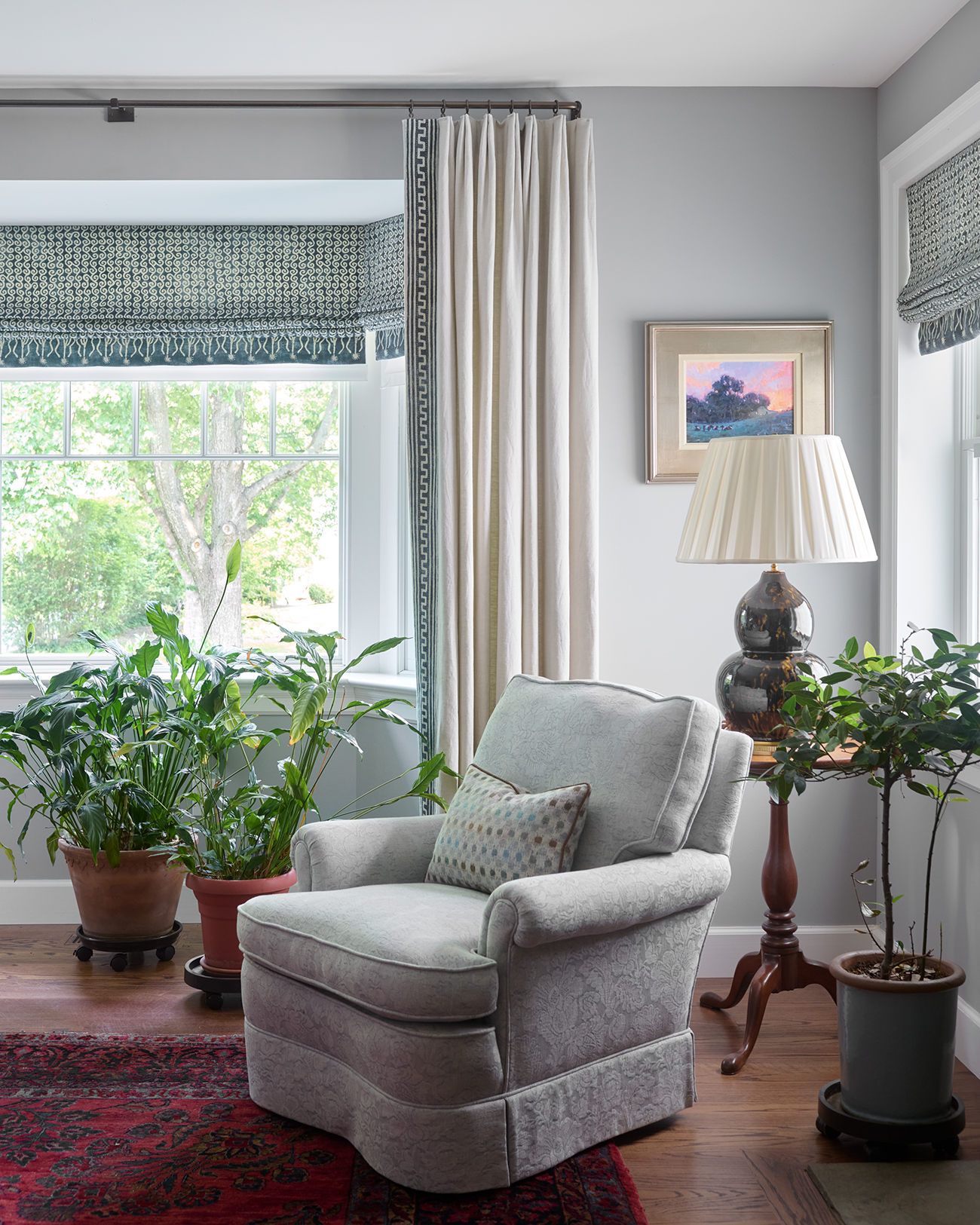
Photos by: Rebecca McAlpin

The Feeling Matters as Much as the Pieces

A room can look “nice” and still not feel good to be in. What I’m aiming for is that moment where you walk in and it just feels resolved, like the room isn’t asking you to keep fixing it.

That feeling can be cozy or calm. It can be polished or playful. But it should feel like your home, your people, your life. When it doesn’t — when the house looks done but still feels sterile or unsettled — it’s rarely a taste problem. It’s usually that the room is missing a few key layers (or they’re happening out of order).


Layering Is What Makes It Feel Finished

Here’s where I see people get tripped up: they try to solve the room one item at a time. They buy a sofa, then a rug, then a coffee table… and somehow it still doesn’t feel right. That isn’t because the pieces are “wrong.” It’s because the room needs layers, and it needs them in the right order.

I’ve seen this show up in very real ways — like a family room that had two outdoor lawn chairs for a while, not because they didn’t care, but because they were overwhelmed and didn’t know what to do next.

I see it just as often in a more common form: a client buys a “great” sofa early, then later realizes it’s dictating everything — the rug can’t be the right scale, the coffee table proportions are off, the lighting doesn’t make sense, and suddenly the room is being built around one decision that happened too soon. In those moments, the problem isn’t effort or budget. It’s sequence.

When I say layering, I mean the elements that make a room feel finished and lived-in:

  • Soft goods: upholstery (sometimes the piece is great — it just needs to be reworked so it belongs) and drapery (it changes softness, scale, and quiet)
  • Surfaces: wall texture (like plaster or grasscloth, add warmth and depth — especially in renovations with hard surfaces)
  • Lighting: especially hanging fixtures, wall sconces, and lamps (overheads rarely give you the feeling you want on their own)
  • Art + finishing: art placement, pillows, throws, and styling — done intentionally, not as an afterthought

Usually it’s not one dramatic change. It’s a series of decisions that build on each other. And when those layers start working together, that’s when the room stops feeling “almost.”

If you want to see what this looks like in practice, the Midland story shows the full sequence.

Read the Midland story →

Photos by: Rebecca McAlpin

The Concept Deck (How I Keep the Vision Clear)

When I’m working with clients, here’s how I keep the vision clear before we get deep into decisions.

Design is visual, and I don’t like to show up with a fully formed plan before we’ve confirmed we’re aiming at the same thing. So after our early conversations — after I’ve asked a lot of questions and I understand what you’re drawn to — I put together what I call a design concept deck.

It’s a simple PDF that captures the look and feel of the project before we start making a thousand detailed decisions. It includes a clear word bank (the exact words you use to describe what you want), a general palette and material direction, a few practical guardrails, and early layout thinking — alongside inspiration images (often references you’ve shared, plus examples from my portfolio when relevant). The words in the deck become our shorthand.

Once we’re aligned, that concept deck becomes our guide stone for the project. It’s what I use to keep selections anchored, and it’s what I share with my team and trades so everyone is working from the same vision.

And just to be clear, this isn’t a Pinterest board: I’m not interested in copying somebody else’s house. Inspiration images are useful, but they’re not you. We’re looking for the spirit — maybe a color palette, a balance of traditional and contemporary, a certain level of warmth — and then we translate that into selections that fit your home, your budget, and your life.


The Sequence Is the Part People Don’t Realize They Need

This is where most people get stuck. Not because they don’t have taste, but because they don’t have an order of operations yet.

Should you pick paint first? Start with a rug? Buy the sofa? Hang art? Decide on drapery? Without a plan, it’s easy to spend money in the wrong order and then try to force everything to work around one early [and sometimes wrong] choice.

A clear sequence lets you prioritize what matters, make decisions in a logical progression, keep what’s meaningful and useful, add what’s missing, and create a room that feels cohesive, not just collected.

Discernment: Knowing What’s Worth Keeping (and What’s Just Noise)

Discernment means knowing what stays because it still serves you (and you love it), what can be updated instead of replaced, what not to buy, what needs to go because it’s not supporting the room anymore, and what to add so the room feels complete. Sometimes the answer isn’t a new chair, it’s reupholstering the right one and moving it into the corner.

It’s less about perfection. It’s more about the room feeling right.

So What Is Good Design?

Good design is when the puzzle clicks and the feeling lands — when you walk in and think, This works. This feels like us. I want to be here.

And if you’re looking at your space and thinking you need to start over… often you don’t. When the plan is right and the layers come together, you can watch a room going from cold and unused… to feeling like a warm hug.

Photos by: Rebecca McAlpin

A Gentle Next Step

If you’re feeling stuck, start small. Pick one room and ask yourself: What do I want to feel when I walk in here? And what’s the one thing that’s keeping me from feeling that right now?

If you’d like help getting to the guide stone — and turning that feeling into a clear sequence — I can help you start with one room and build from there.

A simple way to begin, if you want to start a conversation: send me five pics of the room and three words you want it to feel like. That’s usually enough for me to see what’s missing and how we might tackle it.


Safferstyle | Vol. 5 | From Renovation Fatigue to a Home That Feels Like a Hug

Freshly renovated, newly painted, beautifully empty.

Becky and her husband had completed a whole-home renovation in darling Wayne, PA — walkable to Lancaster Ave, with wood floors underfoot and a bright new kitchen that was genuinely gorgeous.

And for a while, the only place to sit in their finished family room was two outdoor lawn chairs.

That’s what renovation fatigue looks like in real life: not chaos on the construction site, but paralysis in the aftermath. The house is “done,” yet you’re living inside a question mark.

When Becky called me, she wasn’t asking me to manage a renovation. Construction was already over.

She was calling me for what comes after — the part nobody properly budgets for, but everyone feels: taking a beautiful renovation and making it feel personal, lived-in, and unmistakably theirs.

For Becky and her husband, that question mark had been building for years. What she called a five-year “renovation from hell” stretched long past the season of excitement and into sheer endurance. In the same span of time, both of their mothers died within a year of each other. For Becky, that meant inheriting everything. For her husband—one of five—it meant a mix of pieces, responsibilities, and decisions that didn’t come with a map.

When the dust finally settled, Becky looked around at this brand-new, objectively lovely house and didn’t know where to start.

“Everything in the house was new… and we had all this stuff that I didn’t really know what to do with,” she said. “I didn’t know what I should buy new.”

That’s the part people don’t talk about enough: renovations can “finish” and still leave you feeling like a guest in your own life.

Photos by: Rebecca McAlpin

The garage: where the story was waiting

The renovation was complete – the house was beautiful on paper – but still needed the softer work of becoming home. Becky wasn’t looking for a total reset. She was looking for recovery –  for someone who could help her make the next stage feel possible, and the house feel like theirs again. She didn’t want to erase the life they already had. She wanted to incorporate inherited pieces thoughtfully, and move forward without getting overwhelmed.

During the renovation, everything that didn’t have a home ended up displaced — packed into the garage. No cars. Just stacks of furniture, rugs, framed art, inherited pieces, and the kind of emotional weight that makes simple decisions feel impossibly heavy.

Instead of treating the garage like a graveyard of choices, I treated it like a starting line. We went through it together — piece by piece — without pressure. Some things were obvious keepers. Some things needed a new context. Some things carried history but not function.

The point wasn’t to make everything fit. The point was to make the house feel livable. And the relief was immediate. “It was just really nice to go through it and just see what we could use,” Becky said.

One of her favorite surprises came from a piece that had been sitting in limbo: Becky’s mother’s desk. It wasn’t even her favorite. But in the right spot — scaled correctly, placed with intention — it suddenly made sense. It didn’t look like an inherited obligation. It looked like it belonged.

That’s the magic of post-renovation design done well: the past doesn’t get boxed up, and the present doesn’t get bulldozed. Old and new learn how to live together in harmony.

Photos by: Rebecca McAlpin

Making room for Becky again

Somewhere along the way, Becky’s sense of “my space” had gotten blurry.

Her husband retired. The house got bigger than she expected. The room that was supposed to be hers became the preferred guest room because it was closest to the bathroom. Suddenly, she didn’t have a place to spread out.

When I’m brought in after a renovation, I’m always listening for the hidden data, the stuff that never shows up on a floor plan. In this case, it was simple: Becky loved the living room. The morning light made it feel good.

So I said what I often say when someone is trying to force themselves into a space they think they should use: If the living room is your favorite place… let’s make it work for you.

That’s not just design; that’s permission.

Photos by: Rebecca McAlpin

The moment the house changed temperature

The shift didn’t come from one dramatic purchase.

It came from the layers renovations don’t always deliver — the ones that change the emotional temperature of a space. Softness where everything felt hard. Warm light where everything felt bright and echo-y. Texture where everything felt flat.

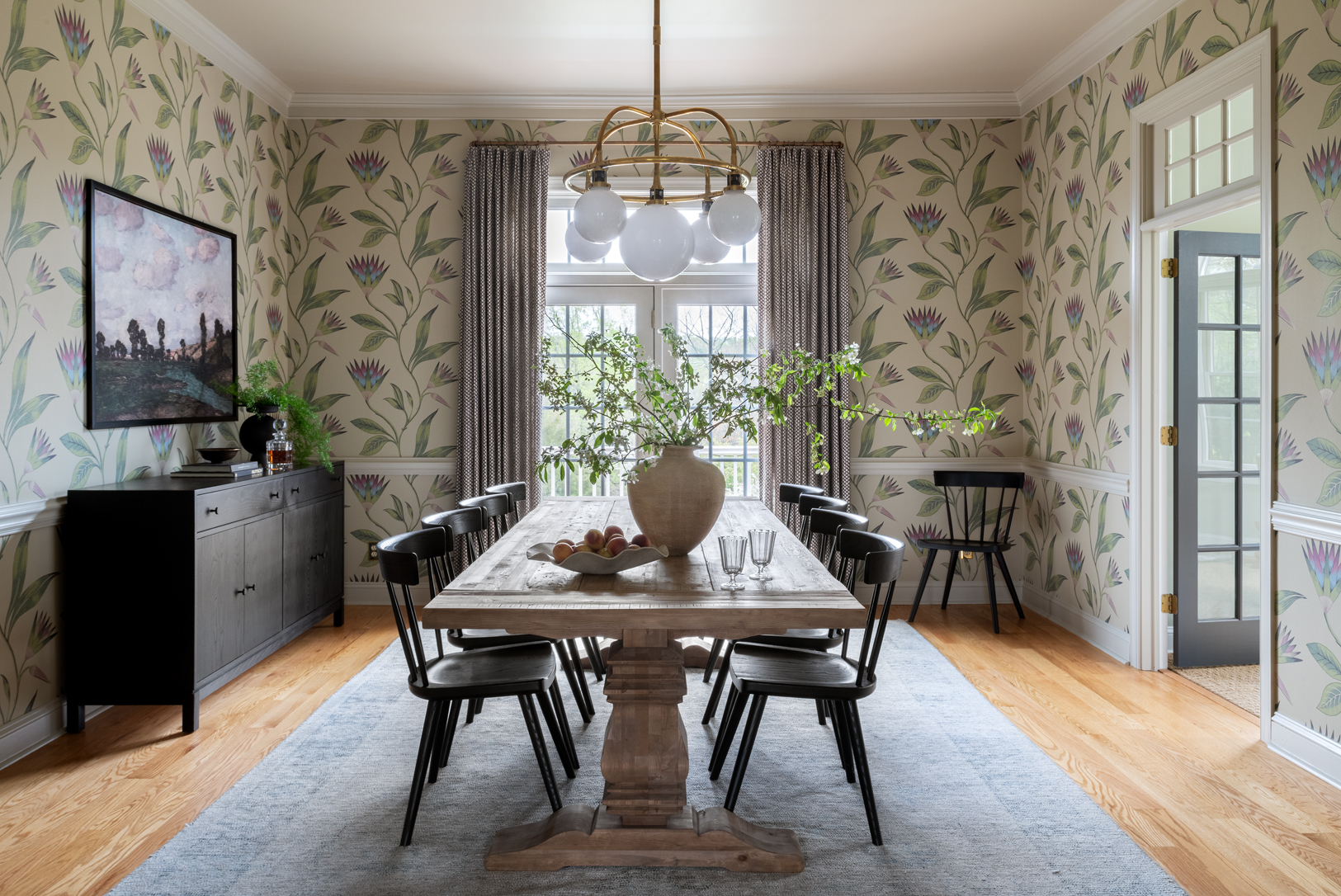
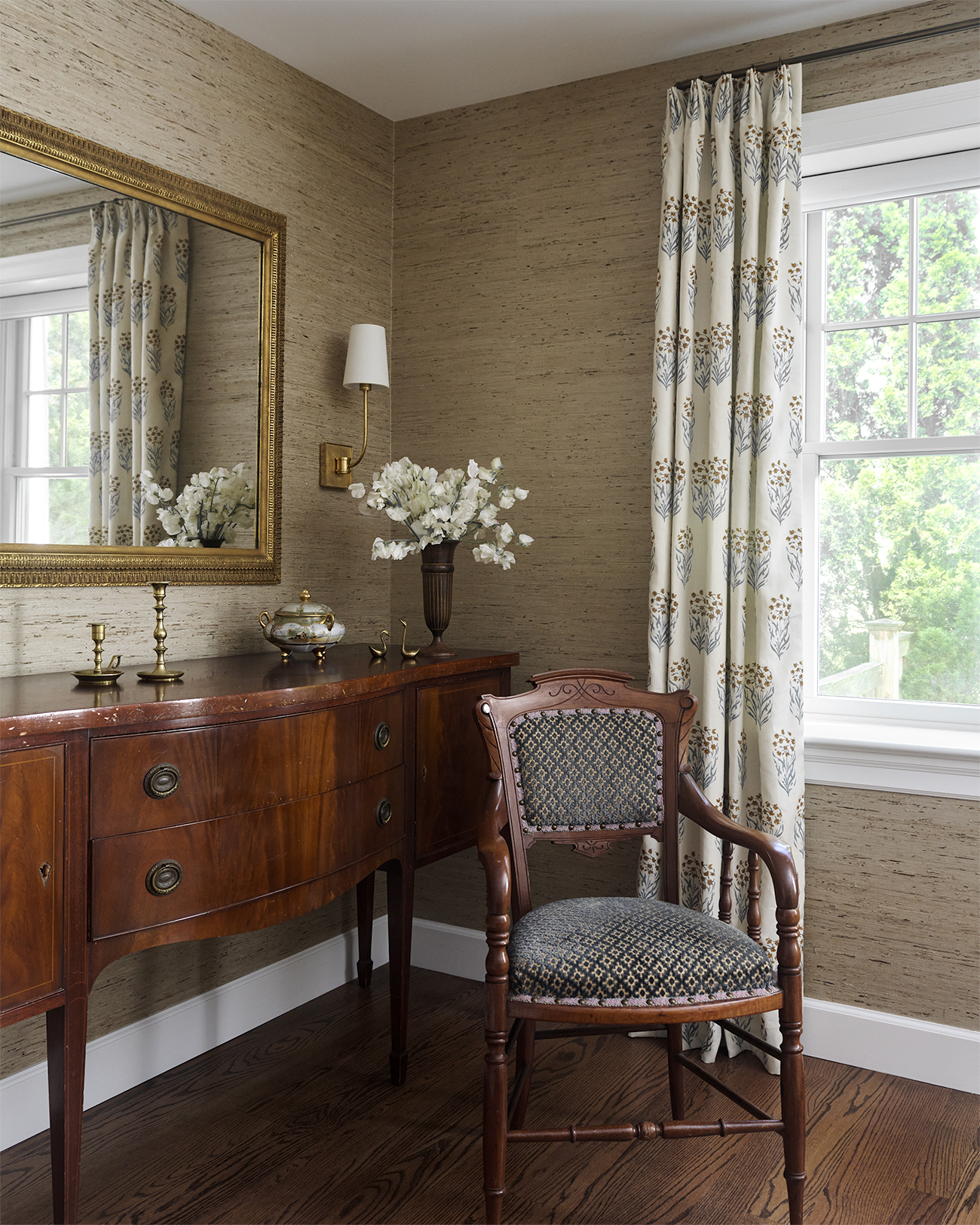
A room doesn’t become a home when the drywall is finished. It becomes a home when it starts holding you. For Becky, the turning point was the dining room. “It’s just… beautiful,” she said. “We put grass cloth on the walls and the fabric that we chose for the drapes is just so pretty, and the light fixtures — and it just transformed the room.

During a final walk-through she told me ”It feels like a warm hug.” I can’t think of a more meaningful compliment.

Not a showroom. A hug. And when the wallpaper and drapery finally went up, Becky texted me a photo with the kind of disbelief that only comes when you’ve lived in “before” for too long: “You wouldn’t recognize this room.”

Photos by: Rebecca McAlpin

The real “after”

A lot of before-and-after stories end at the photo. But the most meaningful proof is what happens when nobody’s watching.

For Becky, the change wasn’t just aesthetic. It was emotional. Practical. Relational. The rooms started coming back online. The house stopped feeling like an expensive responsibility and started feeling like a place you choose. The bedroom became something Becky didn’t even realize she was missing: a genuinely happy spot.

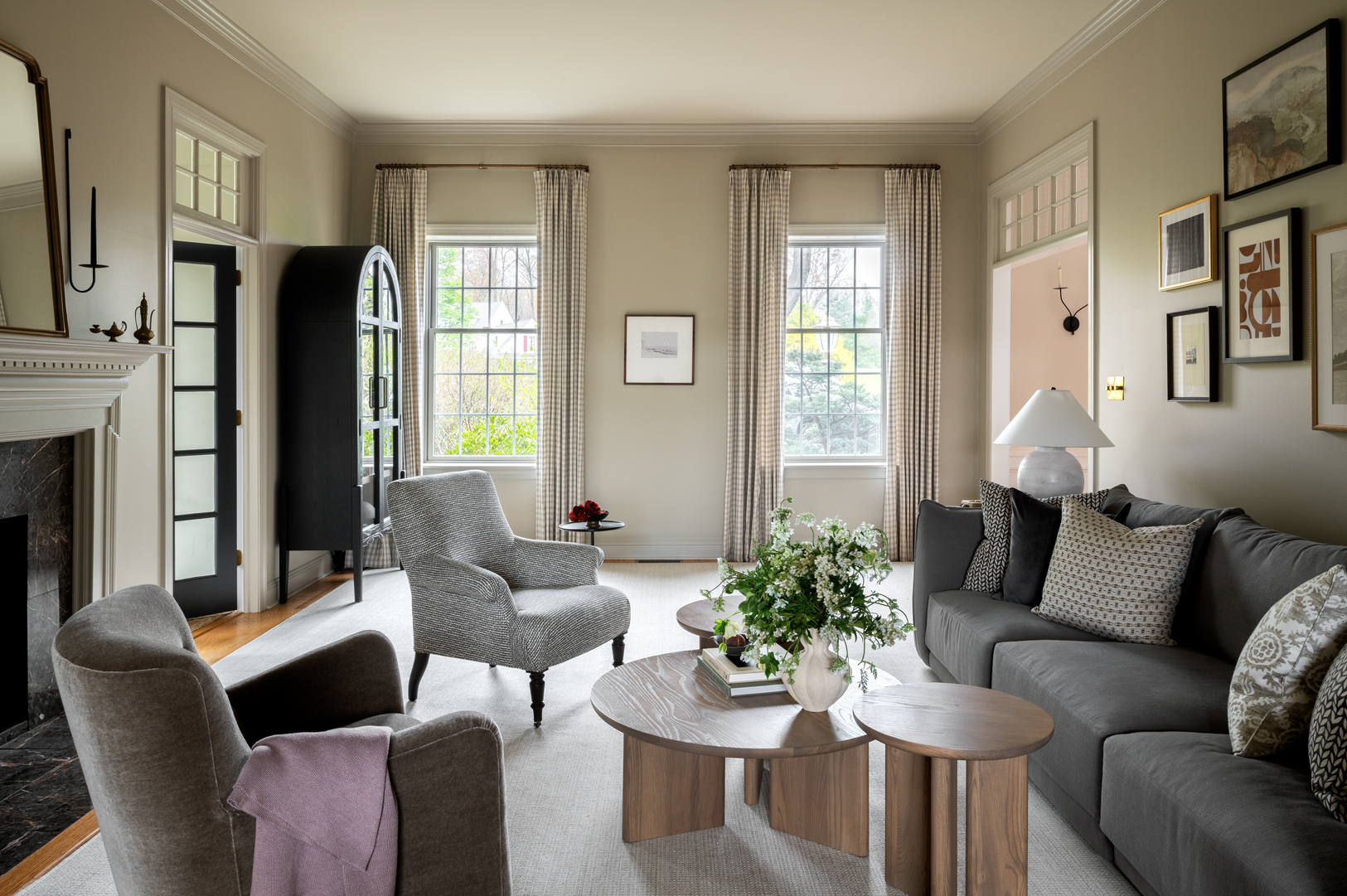
We updated the seating with a custom sofa made to measure — finally replacing a poorly fitting  loveseat she never liked — and added  an ottoman coffee-table moment that made the room feel easy and inviting. We hung drapery to soften the edges, made custom pillows out of a meaningful vintage bolt of fabric in the back of a closet, and updated lighting shades and fixtures. And then real life did what it always does: it moved in.

In the mornings when the grandkids are there, the grandsons climb into bed with her to watch videos. Now the little girls are starting to join too. They play in the room — on the ottoman, on the bed — and the space that once felt unfinished became a place that gets used.

That’s the kind of “after” that matters.

Photos by: Rebecca McAlpin

From lawn chairs to lingering

If you want to measure the success of this project, you could point to the grasscloth, the drapery, the lamps, the way the pieces finally feel cohesive.

But the simplest marker is this: Becky started using the rooms again, lingering in the spaces that used to feel too empty to enjoy, and making new, ordinary memories in the middle of a house that finally felt settled.

Because the house didn’t feel sterile anymore. It felt like theirs again.


If this feels familiar…

If your renovation is “done” but your home still feels unfinished — if you’re sitting in the aftermath of too many choices, too much disruption, too much life — this isn’t a personal failure.

It’s a very human moment. Sometimes the next stage isn’t a renovation. It’s recovery. And a home that feels like a warm hug is a pretty good place to land.

Photos by: Rebecca McAlpin


SAFFERSTYLE | VOL. 4 | LIVE BEAUTIFULLY: THE ART OF ENOUGH

Living beautifully isn’t about more — it’s about what truly supports you.

From Heather

Live Beautifully – The Art of Enough

Once upon a time, I thought “beautiful” meant brand new.

New sofa. New rug. New everything.

Then I started walking into homes that were full of history… but still didn’t feel like the people who lived there.

Every day, I meet clients who have pieces they love (or feel guilty getting rid of), rooms that “work” on paper, and a house that looks fine in photos… but doesn’t feel quite right in real life. The energy feels flat. The rooms ask a little too much. Things don’t quite support the way they actually live.

What’s missing isn’t more stuff.

It’s alignment.

And alignment starts with a process, not a purchase.

So often, our best work begins with an inventory, not a shopping list. We measure what you already own, map the room, and identify what stays, what gets refreshed, and what’s missing to make everything feel cohesive.

Then we layer in what’s needed:

  • The lighting that warms the room at night
  • The drapery that softens hard edges
  • The textures that bring depth and comfort
  • The finishing details that make the space feel intentional

This is the part people don’t see from a “before and after” photo: the decisions in the right order. The calm that comes from knowing what matters and what doesn’t.

At Safferstone, “living beautifully” doesn’t mean starting from scratch.

It means starting with what already matters to you — and building from there.

Over time, I’ve realized that “living beautifully” has less to do with how much you spend… and more to do with how well your space supports the way you actually live.

That’s the quiet luxury of enough.

Photos by: Rebecca McAlpin


Feature Story

Live Beautifully With What You Already Have 

Everyday luxury — without a blank slate.

If you’ve ever shuffled the same stack of mail, walked around the same too-big chair, and thought, “It’s fine… I guess,” this one’s for you.

In this month’s featured guide, I’m sharing how to create everyday luxury using the furniture, decor, and quirks you already own — no demolition, no delivery truck, just intention.

Here’s where to start:

1) Don’t wait for a blank slate

Most real homes are a mix of meaningful pieces, “good enough for now” buys, and things you’re quietly tolerating. You don’t need a perfect starting point.

The magic isn’t in replacing everything.

The magic is in editing and layering with discernment — so what you already have finally makes sense together.

2) Edit with kindness, not guilt

You’re allowed to outgrow your furniture.

Keep what you’d be sad to lose. Relocate what might shine in another room. Release what’s asking too much of you.

“Enough” isn’t deprivation — it’s clarity.

3) Rethink the room before you replace the room

Often it’s not the sofa.

It’s the layout.

A few shifts in placement can turn “this isn’t working” into “oh… there you are.” Flow creates ease — and ease is a form of luxury.

4) Refresh before you rebuy

A piece with good bones can be transformed through reupholstery, refinishing, or the right styling. This is where a home becomes personal — not just new.

5) Layer to elevate

Drapery, lighting, texture, and art are often the difference between “fine” and finished. These are the quiet moves that make a room feel warm, considered, and lived in.

“Living beautifully” isn’t about owning more; it’s about using what you already have, better.

Read the full blog: Live Beautifully With What You Already Have

Want eyes on a room that feels stuck? Reply and tell us which space is asking a little too much right now.

Photos by: Rebecca McAlpin


What if beauty wasn’t something you hunted down, but something you uncovered?

What if it’s already in your home — waiting to be seen in a new way?

Try this:

Walk through your space and ask:

  • What am I “putting up with”?
  • What would happen if I loved this corner 10% more?
  • What feels heavy — and what would feel lighter?
  • What if enough… is enough?

Start small. One room and one decision made with care — instead of defaulting to “good enough.”


Closing Note

Living beautifully isn’t about arriving at some final, finished state.

It’s about layering joy.

Lighting the candle. Using the good chair. Choosing pieces because they hold meaning — not just because they’re trendy.

And sometimes? It’s as simple as asking:

What can we do with what you already have — if we had a thoughtful plan?

You can start that process on your own.

And if you want a partner in it, I’m here for that part, too.

Because beauty — real beauty — has roots.

With warmth + intention,
Heather

Interested in getting started? Contact us here.


Interested in getting started? You can contact us here.

Coming Next… Vol. 5: Love Where You Live

February’s issue is a little love letter to the homes that hold us.

We’ll be sharing a client story about meaningful pieces, thoughtful edits, and the moment a home finally felt like home.

Think of it as a Valentine’s Day reminder that the best love stories aren’t just between people — they’re between people and the spaces that care for them.

Photos by: Rebecca McAlpin


If this newsletter brought you a little calm and a little beauty, there’s more where that came from.

Monthly design wisdom, curated finds, and quietly elevated ideas — straight to your inbox.

Subscribe to SafferStyle


Live Beautifully With What You Already Have

Stop waiting for “someday.” A designer’s guide to making what you already own feel intentional—with a clear plan and a few high-impact layers.

You move the same stack of mail off the same corner of the counter. You walk around the same too-big chair. You tell yourself, “It’s fine”… but it’s not really supporting you.

Here’s the good news: your home doesn’t need a full reset to feel beautiful.

This isn’t about making do.

It’s about making what you have feel intentional: a thoughtful plan, the right flow, and a few layers that warm everything up.

Living beautifully isn’t about owning more. It’s about using what you already have—better, with intention.

I’m Heather, the designer behind Safferstone. And the way we create everyday luxury is simpler (and kinder) than most people expect:

Inventory first. Plan second. Layer last.

You bring the story. I bring the discernment.

What We Mean by “Enough”

Enough is a home that supports you.

Enough = edited with discernment + planned for flow + layered for warmth
Not “don’t buy anything” or “just rearrange.”

1) You Don’t Need a Blank Slate

A secret from inside the design world: very few homes start from scratch.

Most projects begin with a mix of:

  • Pieces that have meaning—but no clear place
  • Things that were on sale and “good enough”
  • Furniture that technically fits—but doesn’t support how you live

When I walk into a home, I’m not thinking, “How fast can we replace everything?” I’m thinking:

  • What has good bones?
  • What has a story?
  • What’s working harder than it needs to?
  • What’s missing to make this feel cohesive?

Sometimes our best work begins in the least glamorous place — a garage, a back bedroom, a pile of “someday” pieces — where meaning is waiting for a plan.

Try this (5 minutes): Before you buy anything new, make two quick lists:

  • 3 things you truly love (an old rug, your favorite chair, a piece of art, a lamp that makes great light)
  • 3 things you’re always working around (the too-big chair, the wobbly table, the lamp that’s never in the right spot)

Those six items are your starting point. Not the inspiration board. Your actual house.

Photos by: Rebecca McAlpin

2) Edit With Kindness, Not Guilt

We’re so used to shaming ourselves about our stuff.

“I should love this; it was expensive.”

“My mom gave me this, I can’t move it.”

“We just bought that; it can’t be wrong already.”

Here’s the truth: You’re not a bad person if a piece you bought five years ago isn’t serving you today.

When I’m working with a client, we edit with kindness:

  • Keep: anything you’d be genuinely sad to lose
  • Relocate: pieces you love that might simply be in the wrong room
  • Release: items that take more than they give (visually, emotionally, or functionally)

You don’t have to do a dramatic purge. Just choose one space and ask: “If I saw this today, would I choose it again?”

If the answer is no, that’s not failure, it’s information.

Try this: Pick one room and remove one thing that makes your shoulders tense when you look at it. Live without it for a week. Notice what changes.

3) Rethink the Room Before You Replace the Room

So many “problem” rooms aren’t actually furniture problems—they’re flow problems.

The sofa blocks the light. The chairs sit too far apart to have a real conversation. The walkway slices right through the spot where you want to relax.

This is where we use a designer lens: we look for the room’s landing zones—where life actually happens—and design around those first.

A few high-impact shifts:

  • Tighten the seating area so it supports conversation
  • Create one clear pathway through the room
  • Give the room a true “drop zone” (where keys, bags, books actually want to land)
  • Make one comfort spot obvious (a chair + light + surface = permission to rest)

If you’ve been blaming the furniture, start here. Flow creates ease—and ease is a form of luxury

Photos by: Rebecca McAlpin

4) Layer in Everyday Luxury (Without Going Overboard)

Once the bones of the room feel better—edited and planned—you can layer in what I think of as quiet luxury.

Not “show it off on Instagram” luxury.

“Sit down and exhale” luxury.

The layers that change everything:

  • Lighting: the right lamp in the right corner; warmth at night; a room that doesn’t feel flat after sunset
  • Textiles: drapery to soften hard edges; pillows and throws that add comfort and texture
  • Art + objects: fewer pieces, better chosen—placed where you’ll actually enjoy them
  • Surfaces: a side table where life can land without a gymnastics routine

Try this: Choose one small upgrade you’ll feel every single day—then use it on an ordinary Tuesday. A warmer bulb. A softer throw. A candle you’ve been saving.

5) Know When to Call in Help

There’s a point where DIY stops feeling fun and starts feeling like a full-time job.

If you’ve:

  • rearranged a room six times and it still feels off
  • bought “just one more thing” hoping it will be the fix
  • been living with a space that asks too much of you for too long

…that might be your cue to bring in a partner.

A good designer doesn’t bulldoze your life—or your furniture.

We create clarity:

  • Inventory: what stays, what gets refreshed, what gets released
  • Plan: layout + priorities (what comes first, so decisions happen in the right order)
  • Layer: lighting, textiles, art, and the few right additions that make everything feel cohesive

That’s how a house becomes a home that supports you back.

Photos by: Rebecca McAlpin

Start Here

If “living beautifully” feels far away, start ridiculously small.

Restyle one surface you see every day. Move one beloved object to a place of honor. Choose one tiny comfort that makes the room feel easier to be in.

Then step back and ask: “Does this support me more than it did yesterday?”

If the answer is yes, you’re already living more beautifully than you were before.

And if the answer is no, bring us in to help support you. We got your [wing]back.


SAFFERSTYLE | VOL. 3 | Flow Like Home

Because flow isn’t efficiency; it’s alignment in action.

From Heather

The Soft Rhythm Of Living

You step into the mudroom. Shoes piled up. A jacket slipping off its hook. Bags in a heap like a forgotten to-do list. It’s the kind of corner that quietly works against you…until one day, you realize you’re tiptoeing through your own home like it’s someone else’s. Nothing’s technically wrong. But nothing truly works.

This isn’t about wrong or right. It’s about rhythm — how your home responds to your life, and whether it’s keeping pace or pulling you off track.

Flow is the quiet architecture of ease. It’s how the house learns your rhythm and responds to it, when the space knows what you need before you do. It’s not performative. It’s personal. And when it’s working, your home begins to support you in ways you hadn’t realized you were missing.

At Safferstone, we build homes that move with you. Flow is our framework. One built from clarity, not clutter. Intention, not impulse. From entryway to exhale.

In Issue 1, we explored the spark.
In Issue 2, we followed resonance.
Now, in Issue 3, we find rhythm, the quiet choreography of everyday ease.

With clarity and cadence,
Heather


Feature Story

The Hidden Cost Of Price Shopping

Bargain hunting is great for holiday decor. Not for your sanctuary.

Let’s name it: price shopping can wreck your flow.

Not because you can’t find something beautiful at a good price, but because a “good deal” often becomes a bad fit.

When you design your home around discounts, convenience, or speed, you end up with a space that feels… off.


Not broken. Not ugly. Just subtly, chronically misaligned.

And that misalignment? It steals your time. Drains your energy. Adds friction to the parts of life that are supposed to feel easy.

Photos by: Rebecca McAlpin

Case In Point:

Like that mudroom that slows you down before your day even starts, one client’s dining room was quietly stealing energy. Gorgeous chandelier. Lovely table. But no one lingered. Why? The chairs she found online were too tall. The paint color she found on Pinterest was too cold. The layout didn’t make conversations feel natural, they felt performative.

We rethought the vibe around one goal: make it feel like a gathering, not a gallery. Shorter chairs. Textural grasscloth. Patterned drapery. A rug that softened the echo. The room didn’t need new everything. It needed a new rhythm.

Here’s What Flow Really Costs:

  • Misaligned choices = More mental clutter
  • Under-functioning layouts = Compensating every damn day
  • Visually chaotic rooms = Nervous system on high alert
  • Cheap finishes = Slow drip of buyer’s remorse

The kicker? Spending more doesn’t guarantee flow. The real investment is in choosing pieces and placements that genuinely support the way you live, right from the start. That’s the beauty of following a well-designed plan and executing it. It’s not about budget; it’s about intentions.


Design is Cumulative

One compromise might not kill your flow. Twelve compromises strung together like sad little pearls? That’s a system failure. Design done right builds momentum, not micro-regrets.

So instead of asking, “What does this cost?” Ask, “What will it cost me to keep living around this?”

Try This:
Walk through your space. Don’t fix, just feel. Where are you compensating? What feels like friction? Choose one element and get honest: Is this here because it serves me or because it was a “deal”?

Photos by: Rebecca McAlpin


Flow isn’t a luxury. It’s what happens when you make aligned decisions — again and again — until ease becomes your new default. And when you stop settling for “good enough,” your home starts working like it was built just for you. (Because it was.)


Coming Next…Vol. 4: Live Beautifully

  • Living beautifully is about alignment, not more stuff. Beauty isn’t “brand new everything.” It’s when your home actually supports the way you live day to day — emotionally, functionally, energetically.
  • Everyday luxury is built in small, intentional moves. Not a massive overhaul. One corner, one ritual, one quiet upgrade at a time — soft lighting, better flow, the good mug on a Tuesday. That’s “live beautifully” in practice.

Because a beautiful home begins with an inspired inbox.

Each edition of SafferStyle is a love letter to intentional living, filled with behind-the-scenes design stories, expert insights, and soulful inspiration to elevate your everyday.

Think of it as your monthly dose of livable luxury:

  • Fresh finds + seasonal styling tips
  • Home rituals + design reflections
  • Sneak peeks into Safferstone transformations

Whether you’re dreaming up your next project or simply craving beauty with meaning, SafferStyle is your curated companion on the journey home.

Let’s design a life that feels as good as it looks.

SUBSCRIBE to SafferStyle